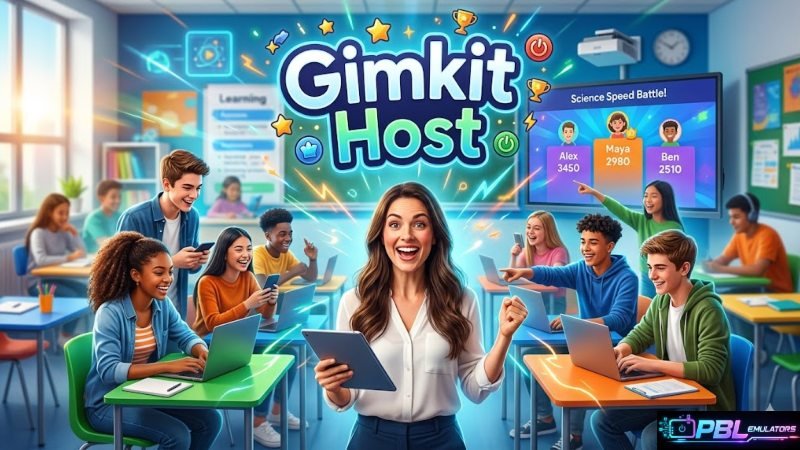
Ever noticed how quickly students lose focus during normal lessons? Now imagine this instead. Your class is loud—in a good way. Students are excited. They are competing. And most importantly, they are learning. That’s exactly what a Gimkit host does.
A Gimkit host is a teacher or group leader who runs interactive quiz games on the Gimkit platform. These games turn simple lessons into fast, fun challenges. As a result, students stay active and remember more. In fact, many teachers report that students recall answers faster after game-based reviews. That’s powerful.
So, how can you become a Gimkit host and create this kind of energy in your class? Let’s break it down step by step.
How to Sign Up and Become a Gimkit Host in Minutes
Getting started as a Gimkit host is very easy. You don’t need tech skills. You don’t need training. In most cases, you can set up your account in less than 5 minutes. First, go to the official website and click on the “Sign Up” button. It’s easy to find. Next, choose how you want to register. You can use your email. Or, if you want speed, you can connect your Google account.
After that, check your inbox. You will see a verification email. Click the link. Your account becomes active right away. Now you land on your dashboard. This is your control center. From here, you can:
- Create quizzes (called kits)
- Start live games
- Assign homework
- Track student progress
At this point, you are officially a Gimkit host. Feels simple, right?
Choosing the Best Plan as a Gimkit Host
Before you run your first game, you should understand the plan options. The free plan works well for beginners. It allows you to create basic kits and host limited games each month. If your class is small, this is often enough. However, limits appear quickly. For example, you may only get a few live sessions. Also, reports stay basic. Now let’s talk about the Pro plan.
The Pro version costs around $4.99 per month (as of 2026). It removes limits. You can run unlimited games. You also get detailed reports. Because of that, many teachers switch after their first week. So, which one should you choose?
- Small class (10–15 students)? Start free.
- Larger class (20–30 students)? Go Pro.
In the long run, better data leads to better results.
Setting Up Your Profile as a Gimkit Host
Now let’s make your profile feel personal. Start by clicking your avatar in the top corner. Then upload a photo. Keep it friendly. A smiling face works best. Next, write a short bio.
For example:
“Mr. Zen’s Grade 8 Math Challenges”
This small detail makes your game space feel real and welcoming. After that, adjust your game settings. Choose colors that match your school. Set timers. Decide how points work. You can also enable power-ups. However, use them wisely. If possible, connect your account to Google Classroom. This saves time later. A well-set profile builds trust. And students respond to that.
Step-by-Step: Hosting Your First Gimkit Game
Now comes the exciting part. You are ready to run your first session as a Gimkit host. Let’s go step by step.
Creating a Kit as a Gimkit Host
Start from your dashboard. Click on “Create Kit.” Give your quiz a fun name. Something like “Science Speed Battle” works great. Then begin adding questions. You can choose:
- Multiple choice
- True/false
- Short answers
Keep things simple at first. Also, add images when possible. Visuals grab attention fast. Even one picture can make a big difference. Now set point values. For example:
- Easy questions = 10 points
- Medium = 25 points
- Hard = 50 points
Timers matter too. Short timers create excitement. Long timers reduce pressure. Try mixing both. Before you finish, test your kit. Play one round alone. Fix errors quickly. This step saves time later.
Launching the Game as a Gimkit Host
Once your kit is ready, click “New Live Game.” Instantly, you get a game code. Share it with your students. They go to the join page and enter the code. Within seconds, names start appearing on your screen. This is the lobby. Wait until most students join. Then click “Start Game.” Now the magic begins. You will see a live leaderboard. Scores change fast. Students compete actively. During the game, you can:
- Pause anytime
- Add bonuses
- Adjust speed
If something goes wrong, stay calm. Ask students to refresh. It usually fixes the issue. At the end, show final results. Celebrate top performers. Then download reports. That’s it. You just hosted your first game.
Top Tips to Improve as a Gimkit Host
Want better results? These tips come from real classroom use.
1. Customize Content
Always match questions to your lesson. For example, I once replaced general history questions with local events. Students instantly became more interested. Because of that, scores improved by almost 20–25%.
2. Use Power-Ups Smartly
Power-ups are fun. However, too many can distract. So, use them during key moments. This keeps balance.
3. Check Reports After Every Game
Reports show what students understand—and what they don’t. Look for patterns. If many students miss one question, review that topic the next day. This small habit improves learning over time.
4. Mix Homework and Live Games
First, assign a kit as homework. Then, run a live game in class. This builds confidence. Even shy students participate more after practice.
5. Support Quiet Students
Not every student loves competition. So, try team mode. Or offer bonus points for effort. One quiet student in my class once topped the leaderboard after joining a team. Moments like that matter.
Common Mistakes Every Gimkit Host Should Avoid
Even experienced teachers make mistakes. However, you can avoid them easily.
Too-Difficult Questions
If questions feel too hard, students lose interest. Start simple. Then increase difficulty slowly.
No Preparation
Creating a kit during class wastes time. Instead, prepare one day before. Even 15 minutes of prep can save your entire session.
Ignoring Tech Issues
Slow devices can ruin the experience. So, remind students to:
- Use updated browsers
- Close extra tabs
- Check internet connection
These steps prevent most problems. While Gimkit runs in a browser, keeping up with the latest hardware like the ZeroMagTech console shows how fast gaming tech is evolving
Why Being a Gimkit Host Changes Your Teaching Style
Let’s be honest. Traditional teaching can feel repetitive. But when you become a Gimkit host, things shift. Students become active. They participate more. And they enjoy learning. In many classrooms, teachers report:
- Higher engagement
- Faster response times
- Better test results
For example, one teacher noticed a 30% improvement in quiz scores after using game reviews for one month. That’s not small. Also, your workload feels lighter. You reuse quizzes. You track progress faster. At the same time, students feel motivated. It’s a win on both sides. Traditional teaching is shifting because students today are driven by competition; exploring how online gaming has evolved reveals exactly why these interactive classroom challenges are so effective now.
Conclusion: Start Your Journey as a Gimkit Host Today
So, where do you stand now?
- You know how to sign up.
- You understand the plans.
- You can create kits and run games.
That’s everything you need to become a Gimkit host. More importantly, you now have a tool that turns learning into something students actually enjoy. In 2026, classrooms are changing fast. Attention spans are shorter. But interactive tools are rising. Gimkit fits perfectly into this shift.
So, why wait? Try your first game this week. Watch how your students react. You might be surprised. And once you see that energy in your classroom, you won’t want to go back. For more interesting and realistic Tips, visit PBL Emulators