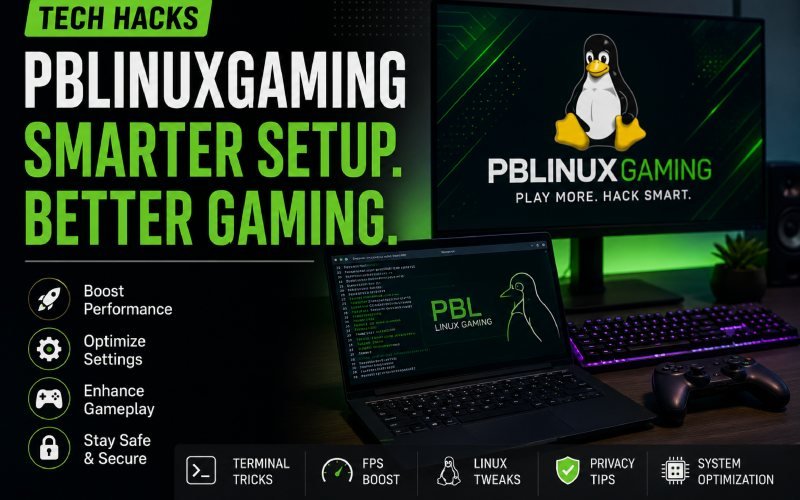
Linux gaming has improved fast, but many players still deal with frame drops, shader stutter, and unstable launch settings. Most guides repeat the same outdated tweaks without explaining what actually works. Tech hacks pblinuxgaming solves that problem with practical Linux gaming optimizations that improve FPS, reduce latency, and create smoother gameplay without expensive hardware upgrades.
What Is Tech Hacks PBLinuxGaming?
Tech hacks pblinuxgaming refers to Linux gaming optimization methods that improve game performance, compatibility, and responsiveness. It combines system tweaks, driver improvements, Proton configurations, Vulkan enhancements, and gaming utilities that help Linux users run modern games more efficiently.
The term does not represent a single app or platform. Instead, it describes a collection of tested Linux gaming techniques shared across open-source gaming communities.
Many Linux gamers use these tweaks to:
- Improve frame rates
- Reduce input lag
- Eliminate shader stutter
- Optimize Proton compatibility
- Improve GPU performance
- Reduce system overhead
Unlike generic gaming tweaks, pblinuxgaming focuses on Linux-native optimization.
Why Linux Gamers Use PBLinuxGaming Tweaks
Linux gives users deeper control over system resources than Windows. That flexibility creates more optimization opportunities.
Still, Linux gaming requires manual configuration in many cases. Proton compatibility layers, Vulkan translation, and GPU drivers often need fine-tuning for maximum performance.
That is where tech pblinuxgaming methods become useful.
Common Linux Gaming Problems
| Problem | Effect on Gameplay | Recommended Fix |
|---|---|---|
| Shader stutter | FPS drops during gameplay | Enable shader pre-caching |
| Old GPU drivers | Poor graphics performance | Update Mesa or NVIDIA drivers |
| Background services | Increased CPU usage | Use GameMode |
| Wrong Proton version | Game crashes | Switch to Proton GE |
| Power-saving governors | Input lag and lower FPS | Enable performance mode |
These fixes target real performance bottlenecks instead of random “FPS hacks.”
Best Tech Hacks PBLinuxGaming Tips for Better FPS
Enable GameMode
GameMode remains one of the easiest Linux gaming optimizations.
It temporarily adjusts CPU governors, process priorities, and power settings when a game launches. Many players notice smoother gameplay immediately after enabling it.
Install it on Debian or Ubuntu-based systems:
sudo apt install gamemode
Launch games with:
gamemoderun %command%
This tweak works especially well for CPU-heavy games.
Use Proton GE Instead of Standard Proton
Standard Proton works well, but Proton GE often fixes compatibility issues faster.
Many Linux gamers use Proton GE for:
- Better cutscene support
- Improved anti-cheat compatibility
- Faster bug fixes
- Improved Vulkan performance
Install ProtonUp-Qt to manage Proton GE builds quickly.
For compatibility testing, Linux gamers frequently check the official ProtonDB compatibility database before changing launch settings.
Switch to Vulkan Rendering
Vulkan performs better than OpenGL in many Linux gaming environments.
Most modern Linux gaming improvements depend on Vulkan translation layers like:
- DXVK
- VKD3D-Proton
- Mesa Vulkan Drivers
Why Vulkan Matters
| Rendering API | Linux Gaming Performance | Recommended Use |
|---|---|---|
| OpenGL | Stable but older | Legacy games |
| Vulkan | Faster and smoother | Modern AAA games |
| DirectX via Proton | Depends on translation | Windows games on Linux |
Players using AMD GPUs often see major performance gains after switching fully to Vulkan-based rendering.
Optimize GPU Drivers Correctly
GPU drivers directly affect Linux gaming performance.
NVIDIA Users
NVIDIA users should install official proprietary drivers instead of older open-source alternatives.
Useful NVIDIA tweaks include:
- Enabling Force Full Composition Pipeline for tearing fixes
- Using performance power mode
- Adjusting fan curves with GreenWithEnvy
AMD Users
AMD cards perform extremely well on Linux through Mesa drivers.
Recommended AMD optimization tools include:
- CoreCtrl
- Radeon Profile
- Mesa updates
Many pblinuxgaming enthusiasts prefer AMD GPUs because Vulkan support integrates efficiently with Mesa.
Reduce Shader Compilation Stutter
Shader stutter remains one of the biggest Linux gaming frustrations.
Games often compile shaders during gameplay, which creates sudden FPS drops.
You can reduce stutter by:
- Enabling Steam shader pre-caching
- Using fast SSD storage
- Keeping Mesa drivers updated
- Using Vulkan-native renderers when possible
Shader optimization matters more than many “FPS booster” scripts shared online.
Use Lightweight Desktop Environments
Heavy desktop environments consume memory and CPU resources while gaming.
Lightweight environments leave more system power available for games.
Best Desktop Environments for Gaming
| Desktop Environment | Resource Usage | Gaming Performance |
|---|---|---|
| XFCE | Low | Excellent |
| KDE Plasma | Medium | Very Good |
| GNOME | Higher | Good |
| LXQt | Very Low | Excellent |
Many experienced Linux gamers switch from GNOME to XFCE or KDE Plasma for better responsiveness.
Improve Storage Performance
Fast storage dramatically affects game loading times and shader caching.
Storage Optimization Tips
- Install games on SSD or NVMe drives
- Enable TRIM support
- Keep at least 15% free storage space
- Store shader caches on faster drives
Enable TRIM support with:
sudo systemctl enable fstrim.timer
This simple tweak helps SSDs maintain consistent speed over time.
Network Tweaks for Online Gaming
Online games depend heavily on stable networking.
Small Linux networking adjustments can reduce ping spikes and improve consistency.
Effective Linux Network Tweaks
| Optimization | Purpose |
|---|---|
| Disable Wi-Fi power saving | Prevent lag spikes |
| Use Ethernet | Improve stability |
| Switch DNS providers | Reduce connection delays |
| Prioritize game traffic | Improve responsiveness |
Cloudflare DNS (1.1.1.1) remains a popular choice among Linux gamers.
Hidden PBLinuxGaming Tweaks Most Guides Ignore
Many articles repeat beginner-level tweaks. Advanced Linux gamers often use deeper optimizations that receive less attention.
CPU Affinity Tuning
CPU affinity allows users to dedicate specific CPU cores to games.
This reduces background interference and improves frame pacing in some titles.
Example:
taskset -c 0-7 steam
PipeWire Audio Optimization
PipeWire improves Linux audio latency compared to older PulseAudio setups.
Competitive gamers benefit from:
- Faster audio response
- Better synchronization
- Lower latency communication
Btrfs Compression
Some Linux gamers use Btrfs compression to improve load times and storage efficiency.
This tweak works especially well on fast NVMe SSDs.
Tech Hacks PBLinuxGaming Mistakes to Avoid
Not every Linux gaming tweak improves performance.
Some popular “boost” scripts create instability or increase crash frequency.
Avoid these mistakes:
- Installing random kernel tweaks without backups
- Disabling critical system services
- Overclocking aggressively without thermal monitoring
- Copying Proton launch commands blindly
- Running outdated Mesa packages
Reliable Linux gaming optimization focuses on stability first.
Best Linux Gaming Tools for PBLinuxGaming
Essential Linux Gaming Utilities
| Tool | Main Purpose |
|---|---|
| GameMode | Automatic system optimization |
| MangoHud | FPS and hardware monitoring |
| Lutris | Manage non-Steam games |
| ProtonUp-Qt | Install Proton GE |
| CoreCtrl | GPU tuning and monitoring |
These tools simplify advanced Linux gaming optimization.
Unique Angle: Why Stable Frame Pacing Matters More Than Maximum FPS
Most pblinuxgaming articles focus only on higher FPS numbers.
Stable frame pacing often matters more.
A game running at stable 90 FPS feels smoother than gameplay jumping between 70 and 140 FPS repeatedly.
Linux gamers can improve frame pacing by:
- Limiting FPS caps
- Reducing background CPU spikes
- Using optimized kernels carefully
- Keeping shader caches warm
This approach creates smoother gameplay instead of chasing unrealistic benchmark numbers.
Unique Angle: Linux Gaming Efficiency Beats Expensive Hardware Upgrades
Many gamers spend money on new GPUs before optimizing their Linux setup properly.
Pblinuxgaming techniques often unlock significant improvements from existing hardware.
Simple changes like:
- Proper Vulkan configuration
- Correct Proton versions
- Updated Mesa drivers
- Lightweight desktop environments
can improve performance noticeably without replacing expensive components.
Gamers who optimize software first usually get better long-term results.
How PBLinuxGaming Continues to Grow
Linux gaming keeps improving because developers continue investing in:
- Proton updates
- Vulkan improvements
- Mesa driver development
- Steam Deck compatibility
- Open-source gaming tools
The growth of the Steam Deck also increased interest in Linux gaming optimization.
As more developers support Vulkan and Linux-native technologies, tech hacks pblinuxgaming strategies will continue evolving. You can also explore additional gaming ecosystem insights through this detailed guide about platform features, safety, and user experience for broader optimization strategies.
Final Thoughts
Tech hacks pblinuxgaming focuses on practical Linux gaming improvements that actually work. The best results come from combining stable drivers, Vulkan optimization, Proton compatibility tweaks, lightweight system configurations, and smart monitoring tools.
Linux gaming no longer requires endless troubleshooting. With the right setup, modern Linux systems deliver smooth gameplay, lower overhead, and impressive performance across both AAA and indie titles.